Below is a paper I wrote for my biblical studies degree. The assignment was to read a difficult passage of scripture and figure out what it means. I had a lot of fun writing this and I hope you have fun reading it.
Introduction
- Psalm 104: A psalm of creation
- Bright vivid imagery inspires wonder and awe
- Describes the purpose of creation
- Densely packed with meaning
The passage I have chosen for this assignment is Psalm 104. I still remember the first time I heard this psalm read in church as part of evening prayer. Although I did not understand exactly what I was hearing, the psalm captured my imagination in a unique way.
The imagery used in this psalm is particularly strange to me. It presents in bright vivid imagery of God’s relationship to creation that brings the meaning of the cosmos alive in a way that speaks to the heart. The contrast to modern atheistic scientific materialism of our present culture could not be clearer. The psalm paints a picture of a cosmos that fulfills God’s purpose and where the beauty of the structure of creation itself becomes a temple for worship. Creation is portrayed as a place where God dwells among the inhabitants He created as the object of worship in His temple, personally providing for the needs of His people to sustain their praise. In reading the psalm, we hear beautiful ornate language that fills us with awe at the intricate majesty of the function of creation. The psalm reveals an enchanted world of spirits, sea monsters, and supernatural phenomenon. All aspects of creation are imbued with special meaning to declare the wisdom of God – the moon and stars, the animals, and the awesome and terrifying power of nature itself. All these things are under His providence and everything that exists works to accomplish His goals.
On the surface, we see that the poem is very beautiful and evocative. But when we look closer at the individual verses of the poem, many interpretive difficulties arise. The poem itself is extremely densely packed with meaning.
Biblical Context
- Web of connected imagery
- Praise psalm
- Figurative language
- Creation reveals the majesty of the Lord
Psalm 104 is one of the most beautiful pieces of Hebrew poetry in the psalter. The poem creates meaning by painting and juxtaposing images side by side in a web of connected symbols, drawing connections between events from the history of Israel and the cosmic order in surprising ways. Being a praise psalm, the author is setting out to show how the splendor and majesty of the created order fulfills God’s purpose in ways that reveal His righteousness to His created beings. In our interpretation of the psalm, we should expect figurative language designed to reveal the meaning of things through the use of symbolism.
In this exploration, we’ll follow the author’s journey through the created order. The poem follows the creation account of Genesis 1, recalling the events of each day of creation with an emphasis on the beauty and purpose of its present working order. But also along the way, the author takes some very interesting side trails that give us insight into other important passages of scripture.
Authorship and Historical Context
- Ascribed to David in the Greek
- Comes from a very different culture
- Context: Exodus from Egypt
- Familiar with other ancient cultures of the levant
The poem is very ancient and the world of the author is totally foreign to us modern people. To understand the meaning the author is trying to convey will take a bit of work to reconstruct the time and culture he was living in. While the author is not stated, the Greek ascribes the poem to David. Thousands of years ago, David ruled as the king of the newly united monarchy of Israel. The time was the early iron age and it was a time very different from our own. It was a time when most people lived a simple agrarian lifestyle.
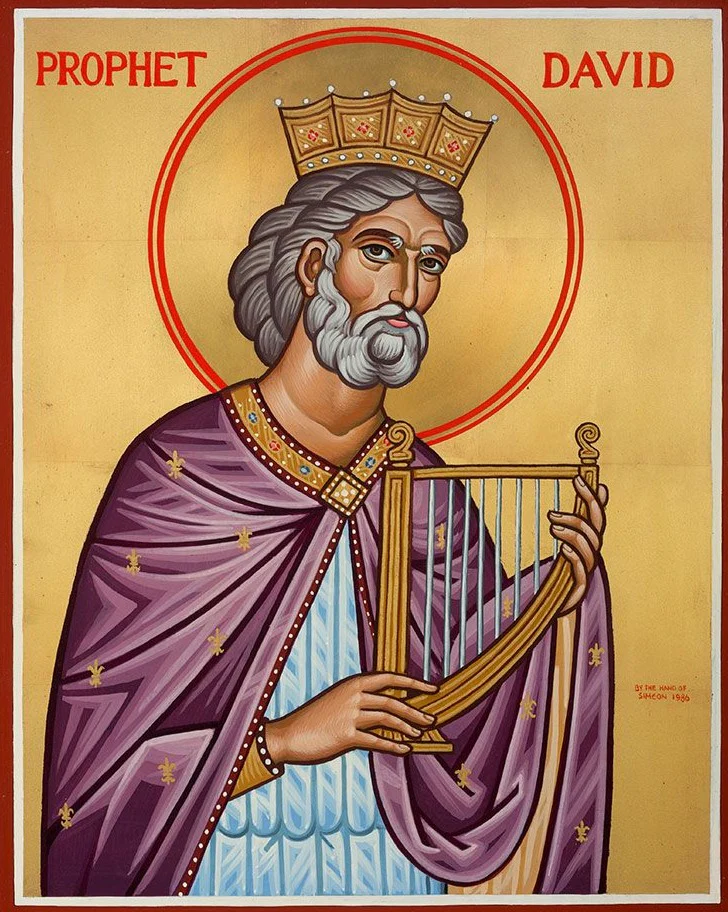
The Israelites had just come into the land of Canaan and had come into contact with the cultures in the land while at the same time having the memory of the Exodus from Egypt fresh in their minds. It was a time when the Israelites were struggling to establish themselves in the land both to defend themselves from their enemies as well as the struggle to maintain their unique cultural identity as a people set apart for God. David was greatly victorious on both fronts, scoring decisive military victories against both the Canaanites and the Philistines.
Part 1: Creation as Temple
- The sun is God’s majestic clothing
- The heavens are like the walls of a tent
- Creation is a temple
- God is in the temple providing security
It’s in this historical setting that the author writes the first lines of his poem.
Bless the LORD, O my soul!
O LORD my God, you are very great!
You are clothed with splendor and majesty,
covering yourself with light as with a garment,
stretching out the heavens like a tent.
He lays the beams of his chambers on the waters;
he makes the clouds his chariot;
he rides on the wings of the wind;
he makes his messengers winds,
his ministers a flaming fire.
The first lines set the tone of the poem and occasion for writing. “Bless the Lord… you are very great!” The poem is telling us about the awesome works of the Lord in creation.
Next we move into the first image of the poem, which is one of the Lord being clothed in a majestic and splendorous garment of light which stretches the heavens out like a tent. In this image, we see a figurative comparison of the Lord’s majesty to the sun. Some scholars have compared this passage to Egyptian literature such as the Great Hymn to the Aten which was written around the same time. The Israelites would have been familiar with Egyptian culture because they were slaves in the land of Egypt. The Egyptians worshipped the sun as one of the mighty gods of Egypt. However, in the plague of darkness that befell the Egyptians, God had shown the Hebrews that this god had no real power and that the sun should not be worshipped. In the psalm, the sun is not a god, but it is rather God’s splendorous and majestic clothing.
Indeed, the heavens declare the glory of God as the psalmist says in Psalm 19:1. And being “clothed in light” is a symbol that’s used with the woman in John’s vision in Revelation 12 to signify the cosmic importance of the coming of the messiah. The image of God standing in the sky clothed with the sun is a way to say that the created order reveals God’s eternal power and divine nature to us (Romans 1:20). However, nature is not God itself, as was a common belief among the people at that time, and even among some modern people.
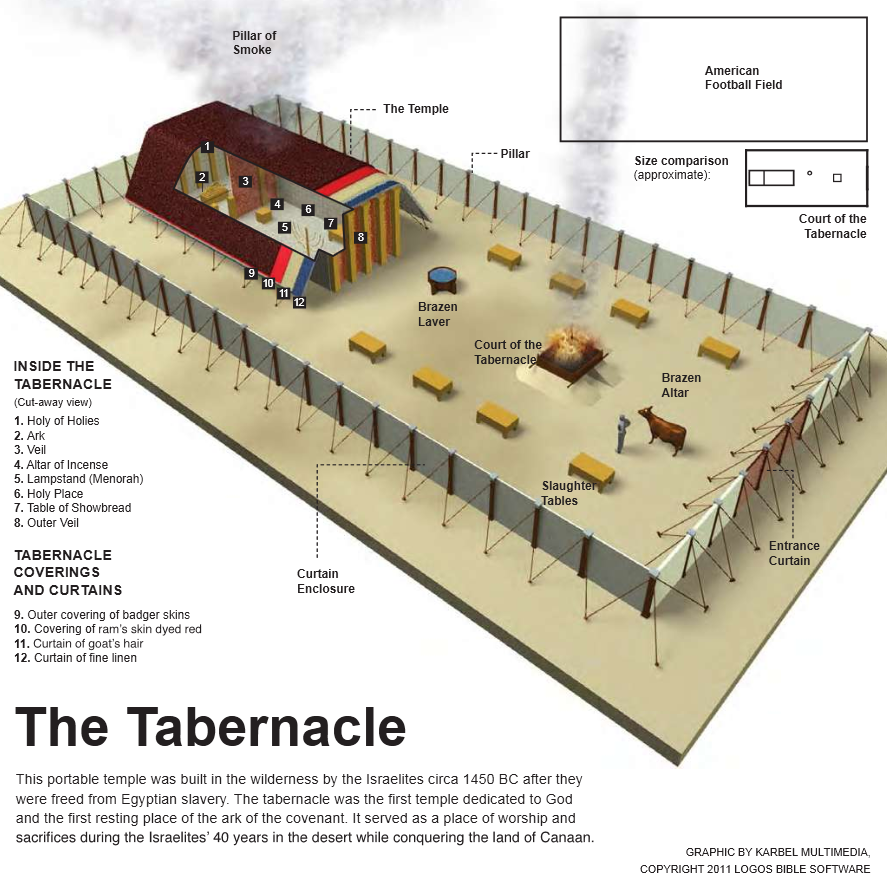
So if nature is not God, then what exactly is it for? In the next line, we’re given a clue as the psalmist further builds up the image and tells us what God is doing up there. God is in the sky clothed in his majestic light “stretching out the heavens like a tent” and “laying the beams of his chambers on the waters”. This describes the cosmos itself as a dwelling place of God among His people in a similar way as you might stretch out your tent on the ground when you go camping. This is likely an allusion to God’s dwelling place among the Israelites revealed as the pattern of the Tabernacle on Mount Sinai which later developed into Solomon’s Temple in Jerusalem. The word for “tent” is the same word for the panels of the curtain enclosure of the Tabernacle.
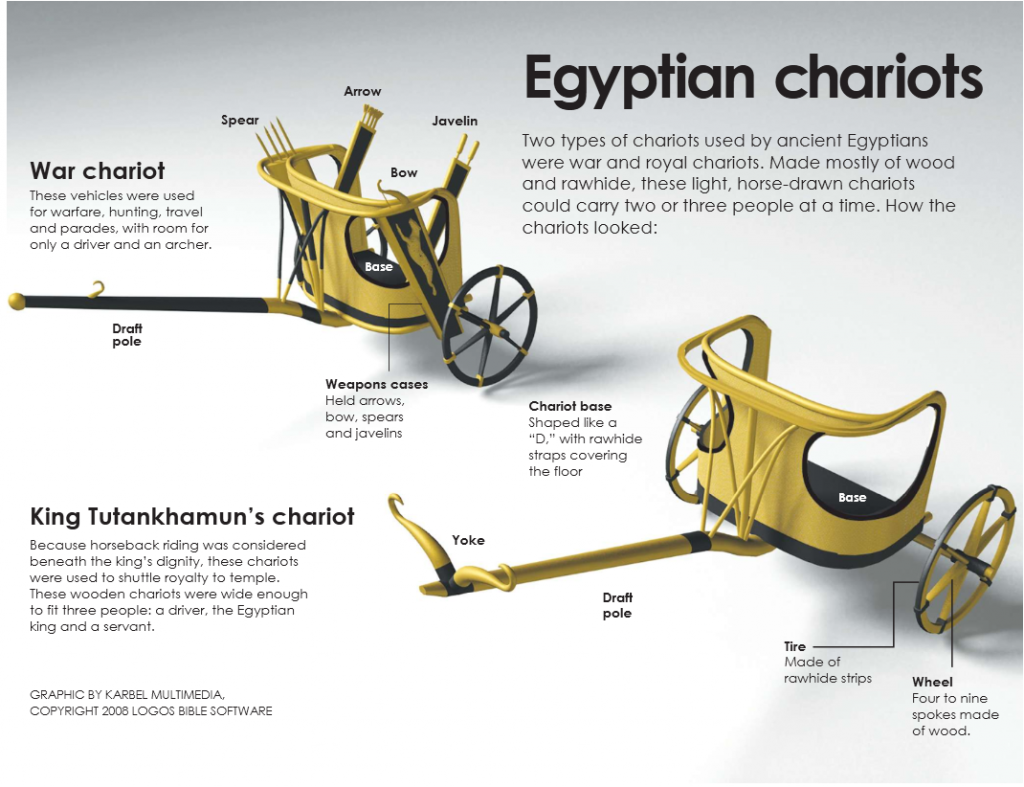
Next, we see a different image of God within His creation as He “makes the clouds his chariots” and “he rides on the wings of the wind”. The chariot was a wheeled vehicle drawn by horses that is most commonly associated with ancient warfare. A chariot would be manned by archers who could be positioned by the horses in the most advantageous position of the battlefield, and could outrun any foot soldiers who would chase it, effectively being able to shoot at the enemy endlessly without being in danger of retaliation. Chariots were difficult to build because they required a lot of iron and only powerful nations could afford them, so kings would ride around in them to demonstrate their military might. The modern equivalent of this image might be God flying around in an F-15 fighter jet – patrolling the airspace and occasionally dropping bombs to keep His people safe.
Some scholars have compared this image to literature describing the Canaanite deity Baal, who is the most common god worshipped by the Canaanites. Baal was a god of storms and fertility also described as riding on the clouds in The Baal Cycle. The psalmist here could be using the language of Baal, but correcting it as if to say that it is not Baal who rides on the wind, but God to take a jab at the worshipers of Baal by ascribing all his power to God. The message is that God truly has divine providence over all of nature.
Together these images paint a picture of a God who is not only the creator of the universe, but also plays an active role in a personal way. God has created the world as a temple where he dwells among His creation providing for their needs and keeping them safe from enemies.
Part 2: The Structure of Reality
- God creates the land
- God has mastery over water
- Water is a symbol for chaos and danger
- God keeps the water at bay
He set the earth on its foundations,
    so that it should never be moved.
You covered it with the deep as with a garment;
    the waters stood above the mountains.
At your rebuke they fled;
    at the sound of your thunder they took to flight.
The mountains rose, the valleys sank down
    to the place that you appointed for them.
You set a boundary that they may not pass,
    so that they might not again cover the earth.

The psalm moves downward to the earth, recalling the creation of the land. This roughly corresponds with the day that God created the dry land in Genesis.
And God said, “Let the waters under the heavens be gathered together into one place, and let the dry land appear.” And it was so. God called the dry land Earth, and the waters that were gathered together he called Seas. And God saw that it was good. (Ge 1:9–10).
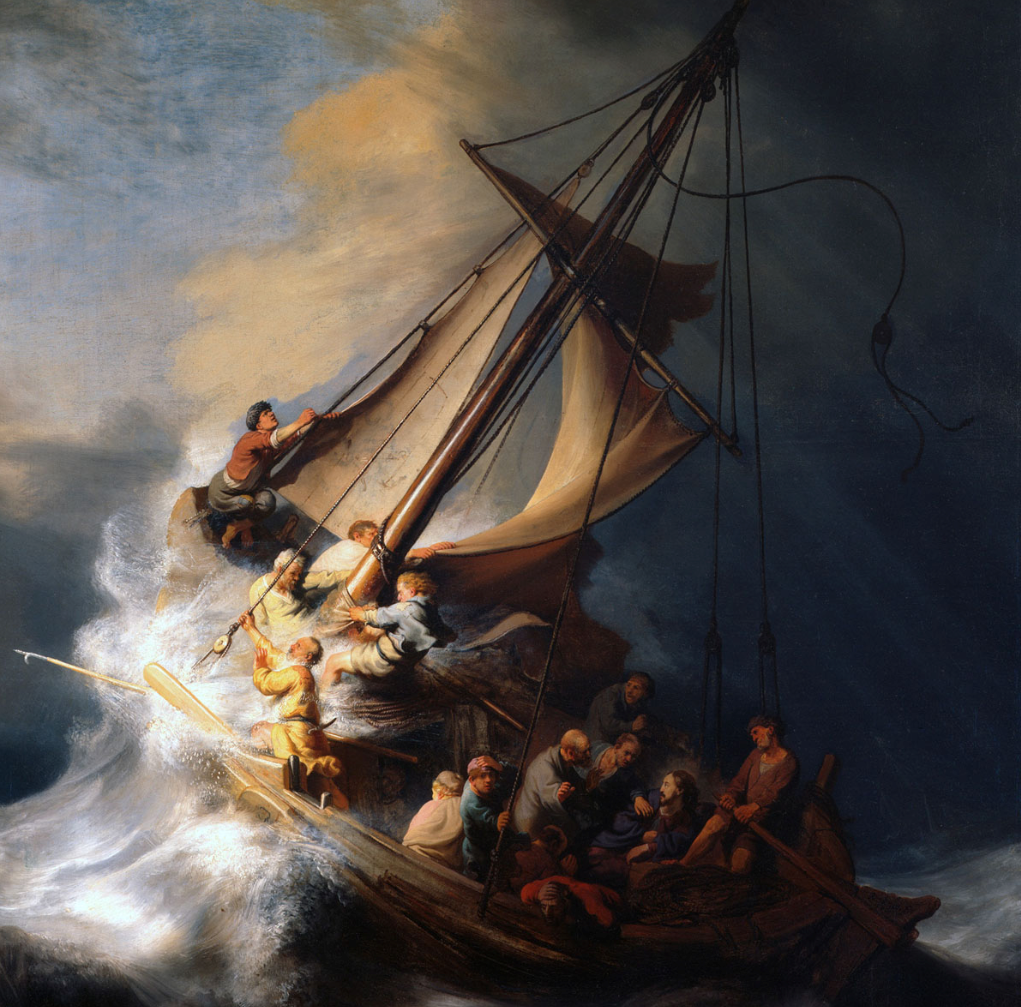
In this passage, we see God creating a place that is a suitable habitat for His creatures. The image of the calling forth of the dry land is meant to convey God’s power to create order out of chaos. The waters of creation are more than merely H2O, but are representative of the “formless and void” (tohu wa-bohu) watery chaos of the initial state of creation. While to us the ocean might invoke the idea of a pleasant vacation to the beach, to ancient people, the water of the sea was a symbol of danger and destruction. Floating in the ocean is not a place where people can live for very long. Sailing in a ship was a treacherous enterprise where you are at the mercy of the elements. At any time, you could be caught up in a storm that would sink your ship or run into a sand bank and be shipwrecked on an unknown island with nobody to save you. And worst of all, as every sailor knows, the sea is the domain of dreadful sea monsters.
But even on dry land, people are still sometimes at the mercy of natural disasters caused by water. Storms and floods are always a danger. Especially the great flood of Genesis 6. Without God’s power to sustain the creation and keep the flood waters at bay, the earth will go back to the uncreated state of watery chaos. But fortunately, He has promised that will not happen.
As powerful and terrifying as these things are, this is something that God has complete control of. When God wants to create dry land, all he has to do is say so. Just like in the Genesis creation story, God speaks the creation into being. There’s no need for struggle or a battle because the waters simply recognize His authority. God tells the waters exactly where to go and the waters go to the shore and stay there.
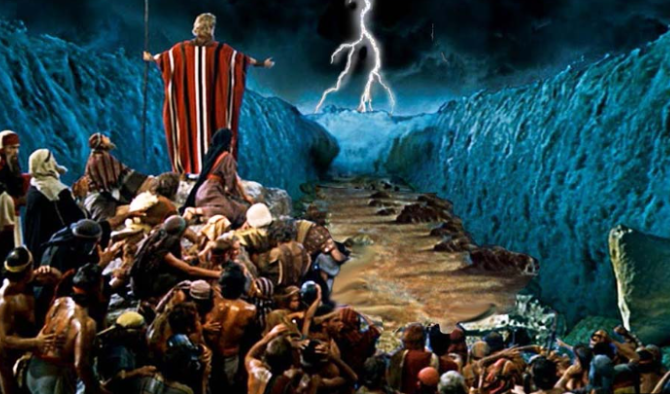
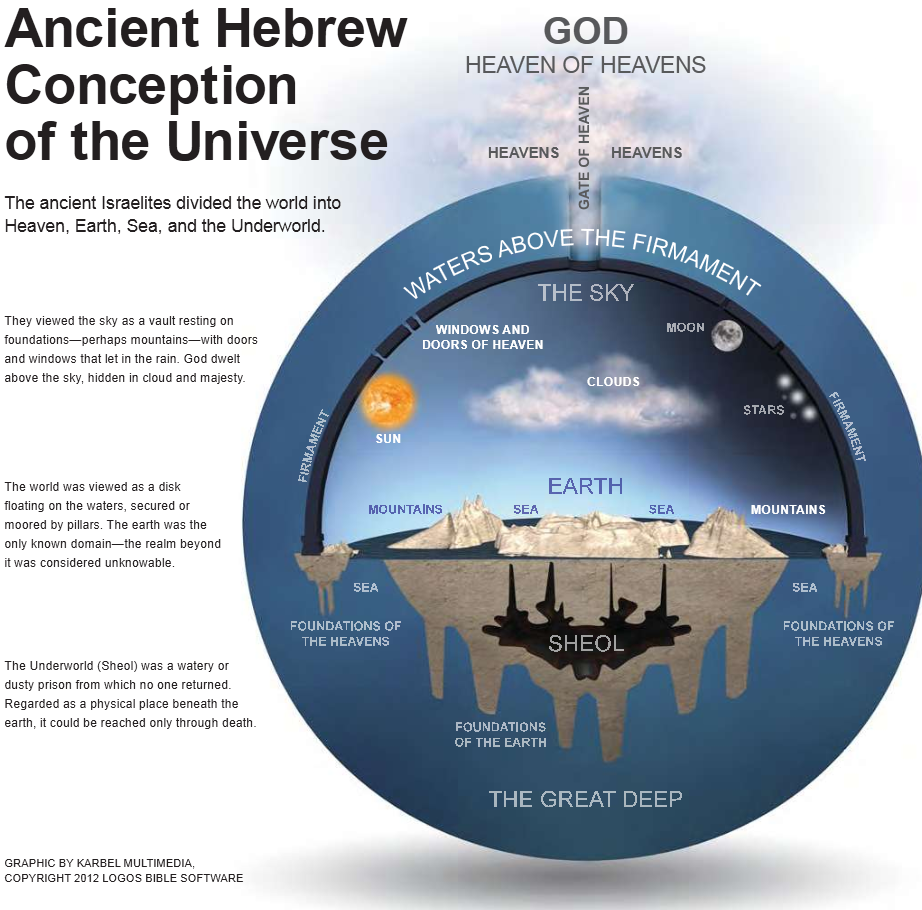
Another interesting image in this section is that the earth is set on its foundations and should never be moved. Going along with the motif of creation as a Temple for the Lord, the Bible often describes the world in architectural terms. The land we walk on is the floor of His temple built upon the foundations He set upon the watery chaos.
He has inscribed a circle on the face of the waters
    at the boundary between light and darkness.
The pillars of heaven tremble
    and are astounded at his rebuke.
By his power he stilled the sea;
    by his understanding he shattered Rahab. (Job 26:10–12)
The earth itself is a disk that rests upon unmovable pillars. While this way of looking at the world may seem strange to modern people who believe the earth is floating around in space hurling around the Sun at thousands of miles per hour, the biblical way of perceiving the world is actually a lot more intuitive. You don’t need an expensive telescope to go outside and put your feet in the grass to know that the earth stands on a firm foundation that will never be moved.
Part 3: God Sustains Created Life
- God gives water to sustain life
- The animals live in creation harmoniously
- God gives us our food
- Creation is like a garden
You make springs gush forth in the valleys;
    they flow between the hills;
    they give drink to every beast of the field;
    the wild donkeys quench their thirst.
Beside them the birds of the heavens dwell;
    they sing among the branches.
From your lofty abode you water the mountains;
    the earth is satisfied with the fruit of your work.
You cause the grass to grow for the livestock
    and plants for man to cultivate,
    that he may bring forth food from the earth
    and wine to gladden the heart of man,
    oil to make his face shine and bread to strengthen man’s heart.
The trees of the LORD are watered abundantly,
    the cedars of Lebanon that he planted.
    In them the birds build their nests;
    the stork has her home in the fir trees.
The high mountains are for the wild goats;
    the rocks are a refuge for the rock badgers.
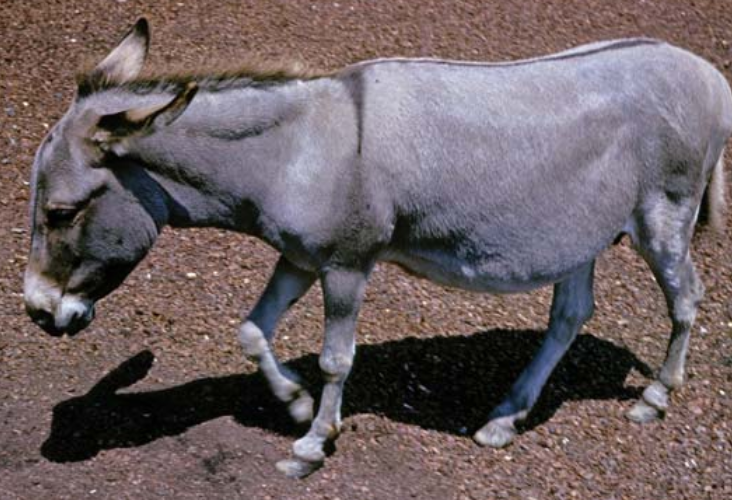
Next the psalmist shifts from water as destructive chaos to using a different kind of image for water. While the flood waters of the sea bring death and destruction, the gentle springs that come out of the earth give water that nourish the animals. Here we see God sustaining the creation by providing His creatures with what they need in a personal way. The springs coming out of the ground is God giving the animals something to drink. In the previous section, the psalmist described the structure of the creation itself as a magnificent temple. Now the psalmist has moved on to describe the life that is in that temple and how the creation is a good place for those things to live in.
And God said, “Let the earth sprout vegetation, plants yielding seed, and fruit trees bearing fruit in which is their seed, each according to its kind, on the earth.” And it was so.The earth brought forth vegetation, plants yielding seed according to their own kinds, and trees bearing fruit in which is their seed, each according to its kind. And God saw that it was good. And there was evening and there was morning, the third day. (Genesis 1:11–13)

This section describes the whole creation as if it were a big harmonious garden that God is taking care of. God waters the mountains like someone might water their garden. He’s growing the grass and the crops so that people can eat. He makes the creation a suitable home for the animals who live there. The birds are singing peacefully in the trees, the wild goats are frolicking in their mountain abode, the rock badgers are safe in their rock dens, and the donkeys have enough to drink.
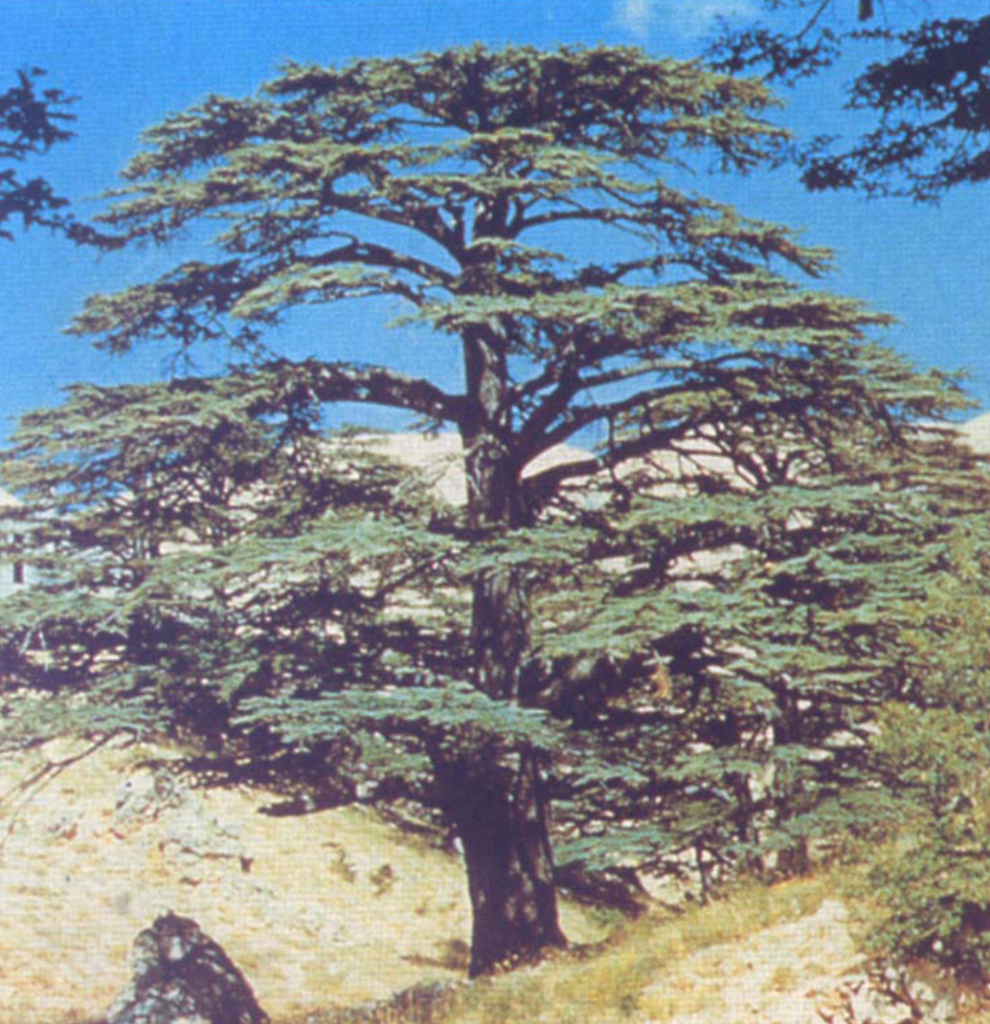
The cedars of Lebanon was a forest famous at this time for its beauty. The tall trees of the forest were sought after as timber for their sturdiness and because they can make very long boards. Using boards from the cedars would be required to make very large buildings. Trees from the cedars of Lebanon were used by Solomon to make the Temple (1 Kgs 5:6). This wood represents the finest that the earth has to offer. It’s often used as a symbol representing the fine goods offered for trade by the Phoenecian cities of Tyre and Sidon. These areas were the home of wealthy traders who sold the materials for luxury goods for royalty all around the levant.
The people of the time would have understood the cedars of Lebanon in this context as a symbol of beauty, wealth, luxury, and the material of the furnishings of a royal palace. The psalmist invokes this image to make the point that the most beautiful things on earth come from God’s creation and are under His care.
Part 4: From the Top of the Heavens to the Bottom of the Ocean
- The lights in heaven track the seasons
- The wild beasts and the ocean creatures
- All things declare the glory of God
- Even the forces of chaos declare the glory of God
He made the moon to mark the seasons;
    the sun knows its time for setting.
You make darkness, and it is night,
    when all the beasts of the forest creep about.
The young lions roar for their prey,
    seeking their food from God.
When the sun rises, they steal away
    and lie down in their dens.
Man goes out to his work
    and to his labor until the evening.
O LORD, how manifold are your works!
In wisdom have you made them all;
    the earth is full of your creatures.
Here is the sea, great and wide,
    which teems with creatures innumerable,
    living things both small and great.
There go the ships, and Leviathan,
    which you formed to play in it.
This next section corresponds to the creation of the lights in the sky.
And God said, “Let there be lights in the expanse of the heavens to separate the day from the night. And let them be for signs and for seasons, and for days and years, and let them be lights in the expanse of the heavens to give light upon the earth.” And it was so. And God made the two great lights—the greater light to rule the day and the lesser light to rule the night—and the stars. And God set them in the expanse of the heavens to give light on the earth, to rule over the day and over the night, and to separate the light from the darkness. And God saw that it was good. And there was evening and there was morning, the fourth day. (Ge 1:14–19).
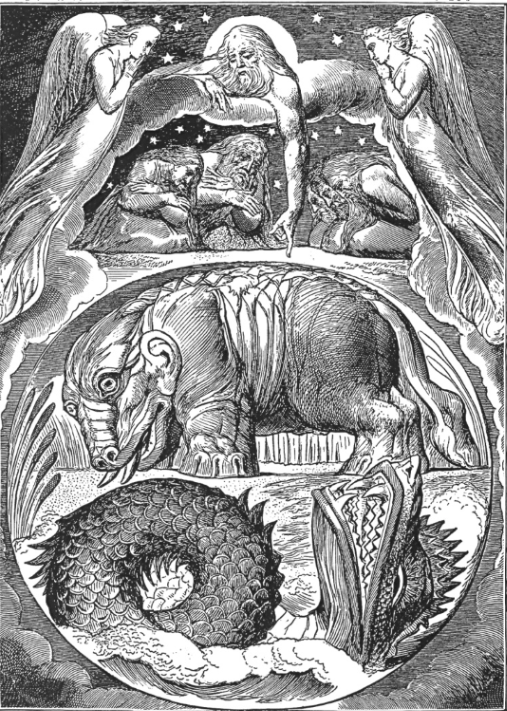
In the cosmology of the Bible, the sun, stars, and moon are not merely big planetary bodies of dust and gas floating in space thousands of light years away. They are there to provide the creatures of the planet with light and to mark the seasons. For instance, holidays such as the Jewish Passover which God commanded to be celebrated based on the solar cycle (that is, once per year). The cycle of the light of the sun is used to track the Sabbath, which happens every seven days (Ex 20:10). Tracking time through the movement of heavenly bodies would have also been necessary to an agrarian people to know when was the optimal time to plant their crops. The psalm speaks of God’s purposes for the heavenly bodies rather than to their materiality and precise location like astronomy does. And we read in Psalm 19 we can see the heavenly lights have a very lofty purpose indeed – to declare the glory of God.
The heavens declare the glory of God,
    and the sky above proclaims his handiwork.
Day to day pours out speech,
    and night to night reveals knowledge.
There is no speech, nor are there words,
    whose voice is not heard.
Their voice goes out through all the earth,
    and their words to the end of the world.
In them he has set a tent for the sun,
    which comes out like a bridegroom leaving his chamber,
    and, like a strong man, runs its course with joy.
Its rising is from the end of the heavens,
    and its circuit to the end of them,
    and there is nothing hidden from its heat. (Ps 19:1–6)
The lights of the sky ran their course across the dome of the sky known as the firmament. This is a hard dome made of metal that exists over the foundation of the earth which contains the earth and all the heavenly bodies (Job 37:18). Above the metal dome are the waters above the firmament. Anything beyond the firmament of the sky is unknowable chaos. The firmament is like the ceiling of God’s temple.
Now having given this beautiful poetic description of the creation, the psalmist stands back and admires the beauty of it all before turning his attention to the sea creatures including Leviathan, the most fearsome and legendary chaos monster of the ocean. Leviathan is a mighty beast who is a chimera of large predatory reptiles and resembles a fire breathing dragon (Job 41:18–21). A similar monster appears in the myths of the neighboring cultures of Mesopotamia, but also in legendary stories from all cultures. He is the primary adversary against whom the heroes of myths and legend struggle greatly.
But he’s no match for God! Here in the psalm, he’s described as being formed by the Lord as being put in the ocean to have fun. Leviathan is like God’s pet fish. In the book of Job, we get more detail of the fun:
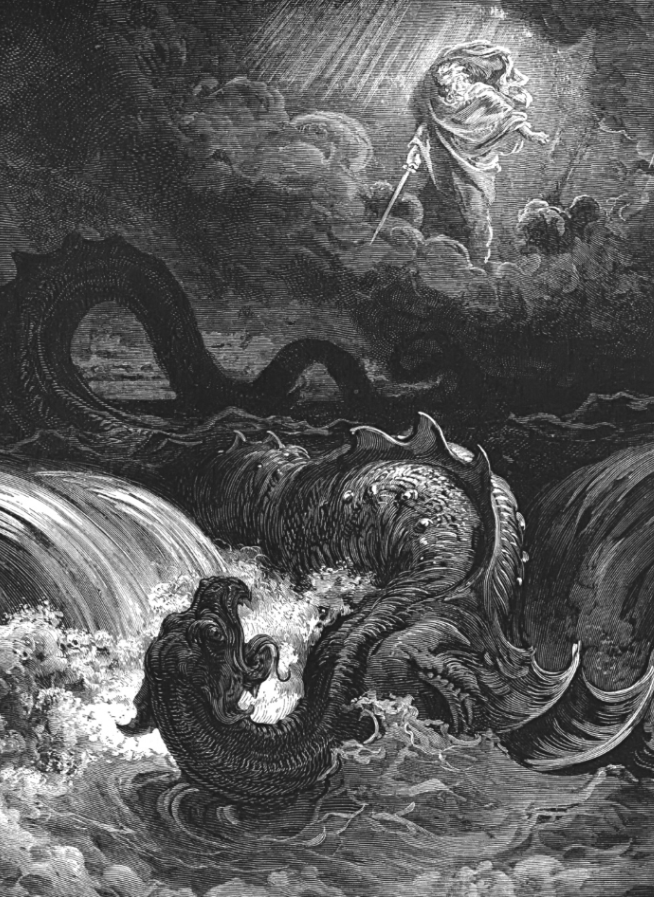
Can you draw out Leviathan with a fishhook
    or press down his tongue with a cord?
Can you put a rope in his nose
    or pierce his jaw with a hook?
Will he make many pleas to you?
Will he speak to you soft words?
Will he make a covenant with you
    to take him for your servant forever?
Will you play with him as with a bird,
    or will you put him on a leash for your girls? (Job 41:1–5)
Part 5: Doxology
- Reprise: Praise the Lord
- God sustains life
- Creation is good
- God is the ultimate authority of everything
These all look to you,
    to give them their food in due season.
When you give it to them, they gather it up;
    when you open your hand, they are filled with good things.
When you hide your face, they are dismayed;
    when you take away their breath, they die
    and return to their dust.
When you send forth your Spirit, they are created,
    and you renew the face of the ground.
May the glory of the LORD endure forever;
    may the LORD rejoice in his works,
    who looks on the earth and it trembles,
    who touches the mountains and they smoke!
I will sing to the LORD as long as I live;
I will sing praise to my God while I have being.
May my meditation be pleasing to him,
    for I rejoice in the LORD.
Let sinners be consumed from the earth,
    and let the wicked be no more!
Bless the LORD, O my soul!
Praise the LORD!
Yes, even Leviathan looks to the Lord for his sustenance. Even the forces of evil recognize the authority of God (Mark 5:6). The psalmist sums up by driving home his point. God is the creator and sustainer of all things. He’s the ultimate authority on everything. All of nature serves His purposes. And now we are called to action. Now that we know that God is powerful beyond all comprehension, the right attitude that we should have is praise and worship. The psalm ends as it began, with a blessing of the Lord.
Conclusion
- Application: reveals God’s character
- Reveals creation in terms of its purposes
- Contrast to scientific atheism
- Reveals the truth and beauty of the world
I believe we’ve only scratched the surface of this psalm. When studying the biblical and historical context of this psalm, we get a clearer and clearer idea of the purpose of creation that enhances our understanding of Genesis 1. We can apply our understanding of biblical cosmology given in psalm 104 prayerfully to increase our faith. When put in these terms, we can see that clearly the best way to describe creation is by centering the discussion around God’s purposes for what He’s created. Psalm 104 is often absent in discussions of apologetics, especially with discussions with those holding to modern materialist cosmology of scientific atheism. We should be careful not to look at the patterns of scientific data and improperly use them to draw conclusions about our humanity that aren’t really there. The psalm is a beautiful way of describing the truth and beauty of the world. It’s clear why this is God’s perspective on creation.
References
Matthews, Victor Harold, Mark W. Chavalas, and John H. Walton. The IVP Bible Background Commentary: Old Testament. Electronic ed. Downers Grove, IL: InterVarsity Press, 2000.
Collins, C. John, Max Rogland, Ryan Patrick O’Dowd, and Douglas Sean O’Donnell. Psalms–Song of Solomon. Edited by Iain M. Duguid, James M. Hamilton Jr., and Jay Sklar. Vol. V. ESV Expository Commentary. Wheaton, IL: Crossway, 2022.
Elwell, Walter A., and Barry J. Beitzel. Baker Encyclopedia of the Bible. Grand Rapids, MI: Baker Book House, 1988.
Ryken, Leland, Jim Wilhoit, Tremper Longman, Colin Duriez, Douglas Penney, and Daniel G. Reid. Dictionary of Biblical Imagery. Downers Grove, IL: InterVarsity Press, 2000.
Barry, John D., Douglas Mangum, Derek R. Brown, Michael S. Heiser, Miles Custis, Elliot Ritzema, Matthew M. Whitehead, Michael R. Grigoni, and David Bomar. Faithlife Study Bible. Bellingham, WA: Lexham Press, 2012, 2016.
Akin, Daniel L., Johnny M. Hunt, and Tony Merida. Exalting Jesus in Psalms 101–150. Edited by David Platt, Daniel L. Akin, and Tony Merida. Christ-Centered Exposition. Nashville, TN: Holman Reference, 2021.
Wilcock, Michael. The Message of Psalms: Songs for the People of God. Edited by J. A. Motyer. The Bible Speaks Today. Nottingham, England: Inter-Varsity Press, 2001.
Barnes, Albert. Notes on the Old Testament: Psalms. Vol. 3. London: Blackie & Son, 1870–1872.
Hubbard, Shiloh, Elliot Ritzema, Corbin Watkins, and Lazarus Wentz with Logos Bible Software and KarBel Media. Faithlife Study Bible Infographics. Bellingham, WA: Logos Bible Software, 2012.

Leave a Reply to Tony’s wife Cancel reply